Squirrels at the Feeder

Learn About Chipmunks, Bats, Squirrels and Birds!

  • Home
  • Squirrels!
  • Chipmunks!
  • Woodchucks
  • Woodpeckers!
  • Foxes!
  • Bats!
  • Raccoons

What Eats Squirrels? Which Animals are the Top Predators?

November 27, 2021 By David

Like other small mammals, squirrels are also susceptible to attacks from a wide variety of predators. These predators vary according to the types of squirrels. Different species of squirrels have evolved to adopt various defense mechanisms against predators, but they still tend to make vulnerable targets. This is also why squirrels live longer in captivity than they do in the wild.

Have you ever wondered, “What Eats Squirrels?” I did and this is what I found!
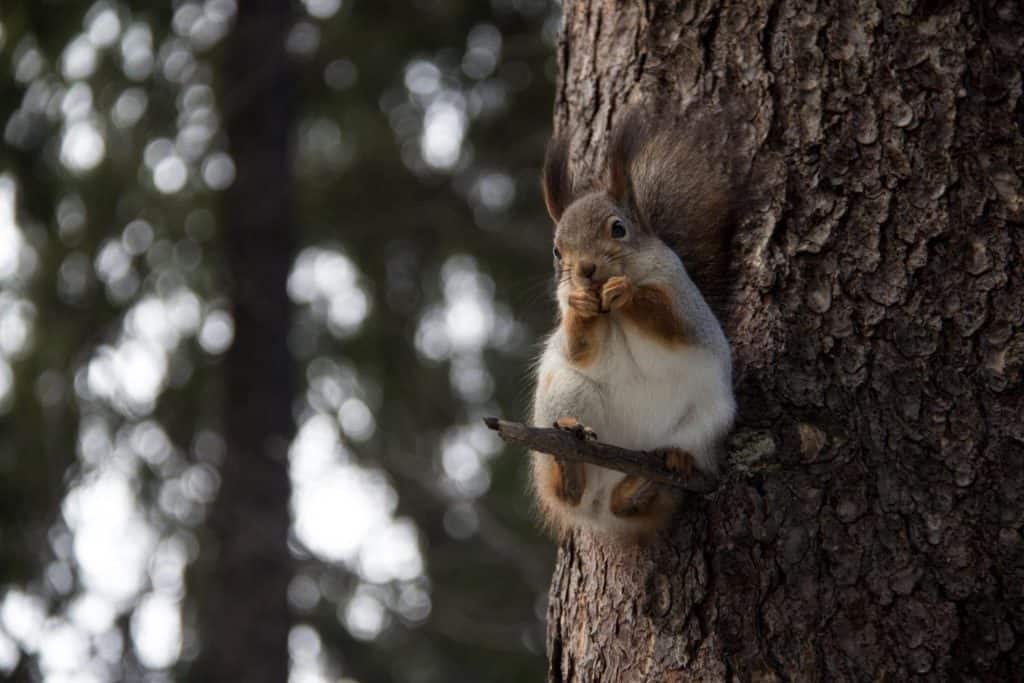
what eat squirrels

[Read more…]

Filed Under: Squirrels!

When do Squirrels Have Babies and How Many Are in a Litter?

January 2, 2021 By David

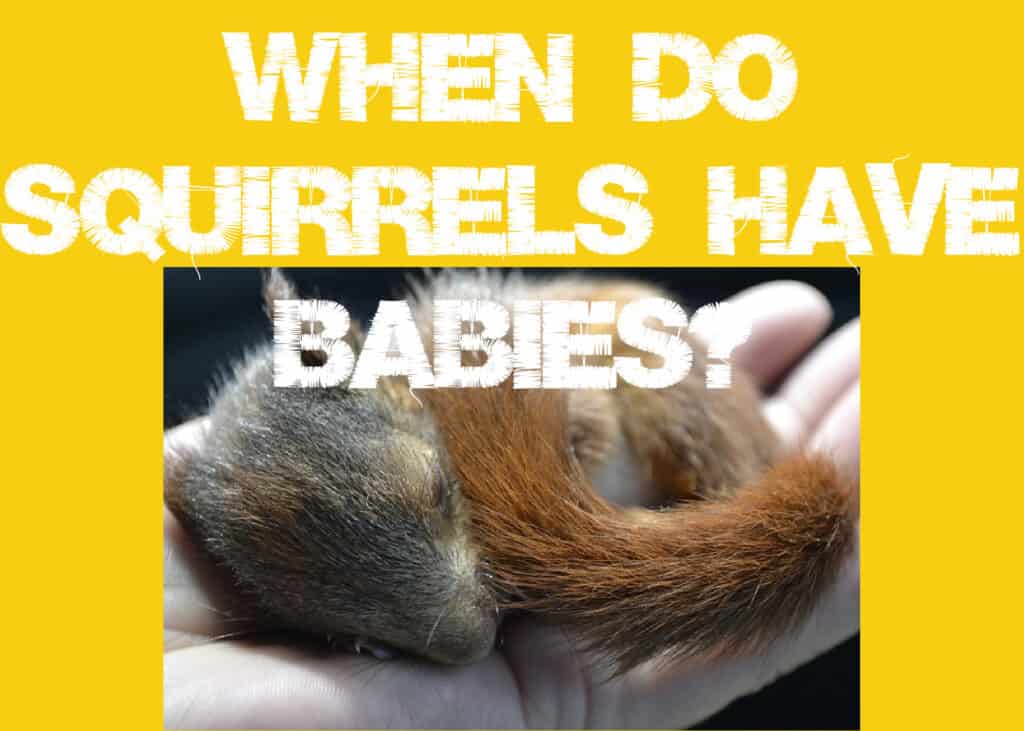
Squirrels are among the most common wildlife that we see in urban environments and they generate a lot of curiosity with their behavior and antics.  People are especially fascinated with baby squirrels because, let’s be honest, they are absolutely adorable!  If you are excited about the thought of seeing some of these delightful itty bitty fur balls then you are probably wondering, “When do squirrels have babies?”

Squirrels have a litter of 2-4 babies, called kits or kittens, in February and March.  Older female squirrels will produce a second litter in August.  The timing of the births will vary based upon latitude and availability of food.  The babies will leave the nest at three months of age and reach full size nine months after being born.

When Do Squirrels Have Babies

The Months That Squirrels Have Babies

We are going to be specifically looking at the Eastern Grey squirrel for this article as it is one of the most common squirrel seen and asked about in urban environments.  Other species of squirrels (Fox Squirrels, Red Squirrels and Flying Squirrels) follow similar patterns of reproductive behavior but with different breeding dates and gestation periods.

Eastern grey squirrels breed in late December through February in warm climates (source).  In colder climates the breeding season is delayed and occurs in January through March (source). Grey squirrels have a second breeding season in May through June which extends into July in colder climates.

Grey squirrels will carry their babies for 44 days which results in the earliest baby squirrels being born in late January and the latest being born in April.  In the fall breeding season the babies will be born in June and July.

Breeding Month Gestation Birth Month
December 44 days January
January 44 days February
February 44 days March
March 44 days April
May 44 days June
June 44 days July
July 44 days August

By taking the differences in climate into account you can see that squirrels in Florida will have babies in late January and June while squirrels in Michigan will have babies in April and August.

The numbers and dates presented above are general ranges but they can vary dramatically based on environmental conditions.  An article published in the Journal of Ecology by John Gurnell in 1996 showed a strong statistical correlation between both food availability and winter severity with the breeding patterns of grey squirrels (source).  To quote from the article’s abstract:

“In good seed years, breeding starts in December, in poor seed years the start of breeding is deferred until the spring. There was no or very little spring breeding in 5 years when food supplies were poor.” 

Here is a more detailed article describing what squirrels eat that shows the importance of different food sources: What Do Squirrels Eat? Two Big Surprises!

How Many Squirrel Babies Are in a Litter?

Grey squirrels average three babies per litter with a maximum liter size of eight. These babies, called kits or kittens, are born blind, deaf, and furless, like most other species of rodents. Their ears are also folded against their skull and they are completely helpless.  The kits weigh about 15 grams which is about the same weight as two tablespoons of flour.

The mother squirrel remains in the nest with the babies, where she cares for them by herself. They are fed every few hours and require constant care by their mother for several weeks.

When Do Baby Squirrels Leave the Nest?

The timeline for the development of young squirrels can be described as follows

  • 1-2 weeks old: Pink skin, eyes and ears closed. Kits are nursing.
  • 2-3 weeks old: Dark skin, eyes and ears closed. Kits are nursing.
  • 3-4 weeks old: Fuzz type fur, eyes and ears closed. Kits are nursing.
  • 4-5 weeks old: Fur development, eyes and ears open.  Kits are nursing.
  • 6-7 weeks old: Bushy tail and looks like a miniature adult. Kits are nursing.
  • 7 weeks old: Weaning begins and solid food is introduced.
  • 10 weeks old: Weaning is complete.
  • 11 weeks old: Young squirrels leave the nest and are independent.

Baby squirrels become fully independent and are able to leave the nest roughly three months after being born (source).  This means that the squirrels that are born in late January will start running around your yard towards the end of April while ones born from the summer breeding season will emerge in the September/October timeframe.  

Depending on the number of squirrels in the immediate area and available nesting sites, the young squirrels may try to build their nest close to their mother. Grey squirrels are not territorial and most stay within two miles of their home nest. If the area is crowded with other squirrels, the young squirrels may be forced to travel further away to establish their nest.

Squirrels born from the summer mating season have little time to prepare for winter by fattening up and caching nuts than squirrels born in the spring. As a result, the long term survival rate for summer babies is typically lower than spring babies (source). The other major factor that influences how long squirrels live is the abundance of predators.

How Old Are Squirrels When They Mate?

Young squirrels reach their full adult size and mass around 9 months of age but sexual maturity takes longer to obtain.

Female grey squirrels typically reach sexual maturity when they are about 15 months old while male squirrels are sexually mature closer to 12 months old but will be delayed if in the presence of dominate males.  This means that a female squirrel born in November would be ready to mate in the following summer season.

The reproductive cycle of male grey squirrels is interesting and is defined through testicular development.  Sexually active male squirrels have very pronounced testicles that go through two seasons of testicular regression where the size of their testicles shrink by up to 90% (source).  These times of regression correspond to seasons where females are not breeding and are thought to be a way to conserve energy.

Nutty Squirrel

The thought that testicular regression is an energy conservation mechanism is supported by a study that showed males which were extremely well fed in an enclosed environment did not undergo regression (source).  Further supporting this idea is another study which showed regression was prolonged when food was scarce.

Squirrels do not mate for life and are quite promiscuous.  Males will mate with multiple females and females will mate with multiple males.  It is not uncommon for a female squirrel to have a litter where the kits are sired by multiple fathers.  The mating process involves elaborate chases where males pursue the females and scare away other males.

Read more about it here: Why Do Squirrels Chase Each Other? Are They Fighting?

Filed Under: Squirrels!

Do Squirrels Carry Rabies? What Diseases Do They Get?

January 1, 2021 By David

I love feeding the squirrels and watching my dogs chase them in circles. Most of the time the critters are just scampering around like normal and chattering away at my dogs.

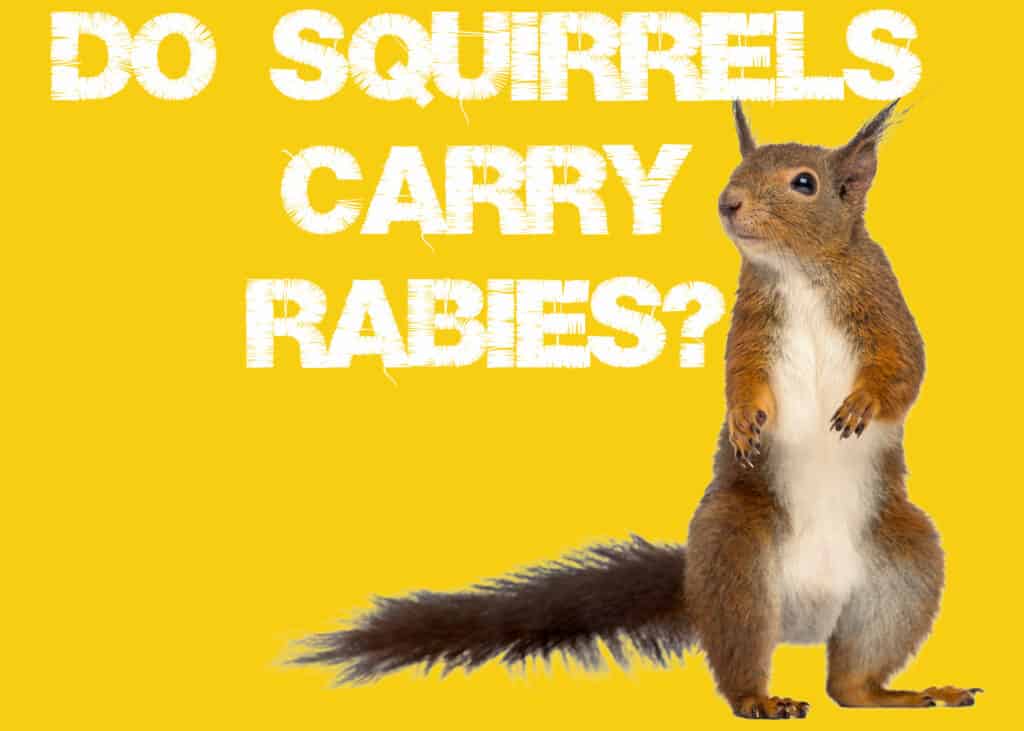
Sometimes though, you will see a squirrel that is acting incredibly aggressive towards humans or that is stumbling around when it walks.  Both of these behaviors are similar to what is seen in rabid wild animals. It made me ask the question, “Do squirrels carry rabies?”

Squirrels do not carry rabies but do carry other diseases.  If you see a squirrel behaving erratically then there are multiple reasons to explain the odd behavior other than rabies.

Do Squirrels Carry Rabies

The Center for Disease Control (CDC) states that squirrels are extremely unlikely to carry the rabies virus.  While rabies is certainly a dangerous disease for humans it is actually quite rare in the US population.  On average there are only 2-3 reports of rabies being transmitted to humans in this country each year (source).

There is a rather short list of US rabies cases since 1951 (source).  In almost all cases of infection the disease was transmitted to a human through contact with bats.

Interested? Read this: Do Bats Carry Diseases? You Betcha!

Squirrels May Carry Other Diseases

Just because you don’t have to worry about rabies doesn’t mean that it is safe to handle squirrels as they can spread tularemia and leptospirosis through their bites.

Tularemia is a bacterial disease that attacks the skin and lymph nodes. The lymph nodes may swell while ulcers may develop at the site of the bite. The symptoms may develop within several days up to two weeks.

Leptospirosis is also a bacterial disease. Those infected with this disease may experience headaches, fever, vomiting, rashes, and jaundice. Leptospirosis may also lead to kidney damage.

In rare cases, squirrels may also spread ringworm. Ringworm is not a worm. It is a fungal infection that primarily affects the skin. A red rash with a ring-like appearance may develop and become irritated. This infection may spread through contact with a squirrel and is less likely to spread as a result of a bite.

While squirrels rarely pass diseases to humans and pets, it is still important to visit a doctor if you are unfortunate enough to getting bitten to take preventative action against infections.

Also, don’t miss this: Can My Dog Get Sick From Killing A Squirrel? Probably Not!

Why Is a Squirrel Acting Erratic?

One symptom people associate with rabid animals is the animal acting erratically.  Normally if you see a wild animal that has a staggering gait or is approaching you in an aggressive manner then you should be concerned about the animal being rabid.  However, there are many reasons to explain this behavior is squirrels other than rabies.

Aggressively Seeking Food

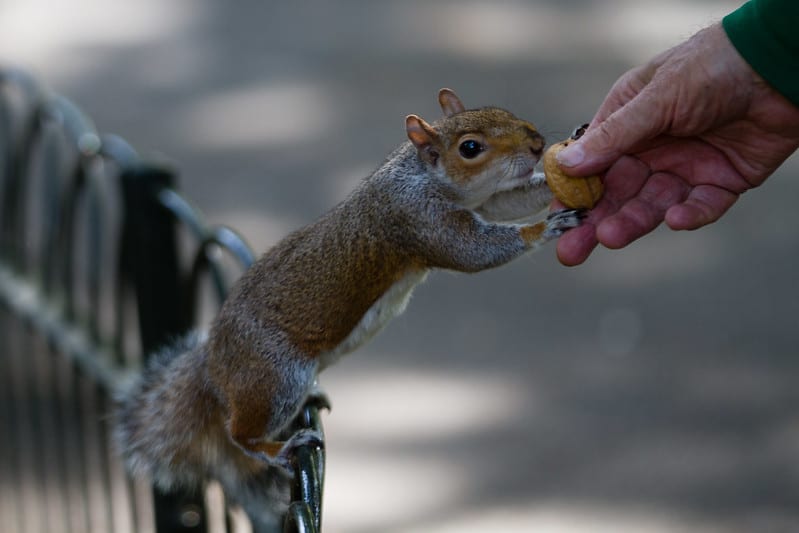
Squirrels are smart animals.  If one of their standard food sources comes from people sitting on park benches and feeding them peanuts then they are going to assume that anyone sitting on those benches has some food for them.

It is not uncommon for squirrels (or even chipmunks) that are used to being hand fed by humans to run towards people and even start climbing on them and going through their pockets.  These squirrels can become quite aggressive at times and have been known to accidentally scratch people with their sharp claws as they climb around them.

Squirrels Can Become Intoxicated

Squirrels have an extremely diverse diet that often includes fruits and vegetables.  If a squirrel eats fruit that has fermented then the little guy can get drunk and will be wobbling around as it walks.

A Squirrel Might Be Poisoned/Injured

Another reason for erratic behavior in a squirrel is if it is in distress from being poisoned or attacked by a predator.

There are a lot of people who dislike squirrels, especially ground squirrels, and resort to the use of poisons to eliminate them.  A poisoned squirrel is going to be suffering and walking/acting in a manner that is not normal.  Unfortunately there is nothing you can do to help a squirrel that has been poisoned.

Squirrels have many predators and are under frequent attack.

Read all about it here: What Eats Squirrels? Which Animals are the Top Predators?

If you see a squirrel that is walking or acting strangely then there is a good chance that it has escaped a predatory attack but was injured in the process.  If you see an injured squirrel you can put some food and water into a sheltered location for it but do not try to catch it with your bare hands.

It is important to remember that squirrel bites are uncommon but that the best prevention is to leave wild animals alone.


Filed Under: Squirrels!

Chipmunks vs Squirrels: Size, Stripes and Ears!

December 22, 2020 By David

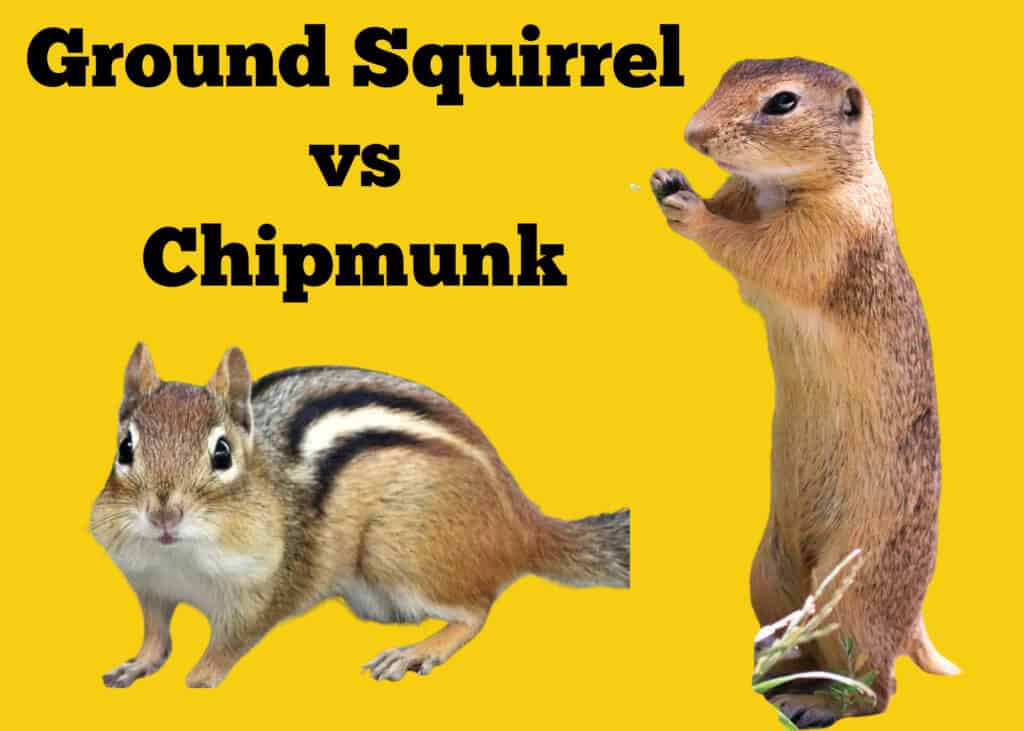
Have you ever been confused between a chipmunk and a squirrel? I know I have. This is especially in the case of certain types of ground squirrels that have a stripes that are similar to chipmunks. However, there are some notable differences between ground squirrels and chipmunks.

Let’s take a look at what these are:

Ground Squirrel vs Chipmunk

[Read more…]

Filed Under: Chipmunks!, Squirrels!

Do Squirrels Migrate Or Stay In One Place?

May 19, 2020 By David

Certain times in history saw mass migrations of squirrels, such as in the 1800s, when they swam the Hudson River between Waterford and Saratoga en masse, with many drowning during the journey, and others dying of exhaustion shortly after.

Since then, other migrations have perplexed naturalists who have raised the question: do squirrels migrate often, or do they stay in the same place? Are these migrations commonplace, or are they due to extreme circumstances?

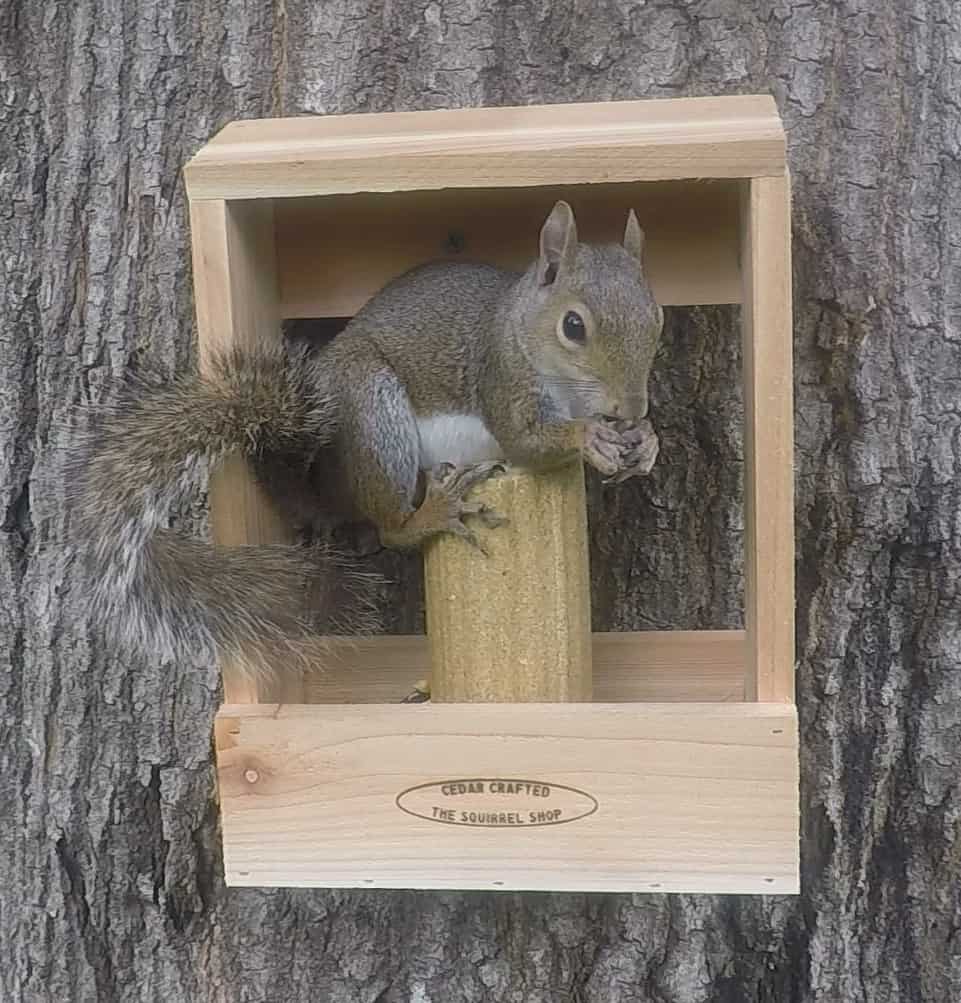
Box with Squirrel

[Read more…]

Filed Under: Squirrels!

Where Do Squirrels Hide Their Nuts

March 27, 2020 By David

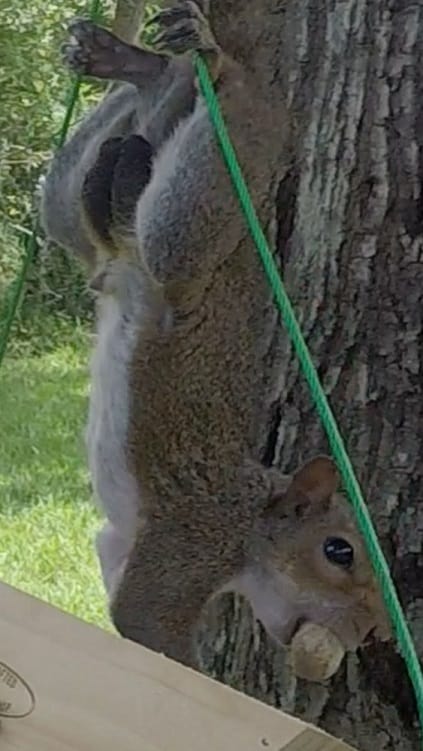
I have a blast watching the antics of the squirrels in my yard.  I keep my squirrel feeders filled with peanuts and enjoy seeing them eat a few at the feeder and then grab one to stash for later.

For a long time I was feeding raw peanuts but ended up switching over to roasted and unsalted because the squirrels kept burying peanuts in my flower pots and the dang things would spout and turn into peanut plants!

After watching theses critters cache food in my flowerpots and garden beds it made me wonder about squirrels in the wild.  Specifically I was wondering , “Where do squirrels hide their nuts?”  It turns out that there are several answers to the question depending upon the type of squirrel.

[Read more…]

Filed Under: Squirrels!

Can Squirrels Be Trained? Tips From Two Famous Examples!

March 26, 2020 By David

Funny stories about squirrels are always popping up in the news and one of the more recent ones that caught my attention was about a man in Alabama that police claimed had trained a squirrel to attack people. The man in question denied that the squirrel was trained to attack but was simply his pet that sometimes got aggressive around strangers.  That story got me wondering about an important question, “Can squirrels be trained?”

The answer is, “Yes, squirrels can be taught to do all sorts of tricks!”  Squirrels are crazy smart rodents that are tenacious in their pursuit of tasty treats.  This combination makes squirrels great animals to teach how to do tricks.  Of course, how long it takes to train them depends upon the individual animal and the complexity of what you want them to do.

Let’s look at some of the more famous examples of trained squirrels so you can get an idea of what it takes to teach them things as well as what they are capable of learning. [Read more…]

Filed Under: Squirrels!

Pet Squirrels: What You Need To Know!

November 4, 2019 By David

They’re a common sight throughout most of North America, and to many, squirrels are as cute and furry as they are entertaining. They’re small, too—they don’t bark, and they even seem to have personalities all their own.

It’s no surprise that squirrels are considered by some to be great pets. But this all sounds too good to be true…can a cute, friendly, furry little critter that scales trees in a flash and hides nuts in its cheeks really be a manageable pet?

In this article, we’ll be exploring the many reasons why squirrels can become great pets. And, we’ll also be discussing the many lesser-known features of squirrels that can present challenges to prospective pet squirrel owners.

Squirrels as Pets

Photo Credit: Pierre-Selim on Flickr

[Read more…]

Filed Under: Squirrels!

Interesting and Fun Facts About Flying Squirrels!

June 21, 2019 By David

I have been interested in flying squirrels ever since watching the Rocky and Bullwinkle show as a kid.  I did a little research and discovered  that there are 43 species of flying squirrels in the world. Most of these can be found in Asia, and only two (Northern and Southern) are native to the United States of America.

Flying squirrels are fascinating creatures and are distinct from their non-flying family members in several ways.  Let’s take a look at some interesting facts about flying squirrels!

[Read more…]

Filed Under: Squirrels!

Sugar Gliders vs Flying Squirrels: The Key Differences!

June 13, 2019 By David

Sugar Gliders and Flying Squirrels are both cute little animals that are popular pets.  Sugar gliders look remarkably similar to the flying squirrels found in the US but in reality, these two animals are extremely different.  Let’s take a quick look at the differences between these two species.

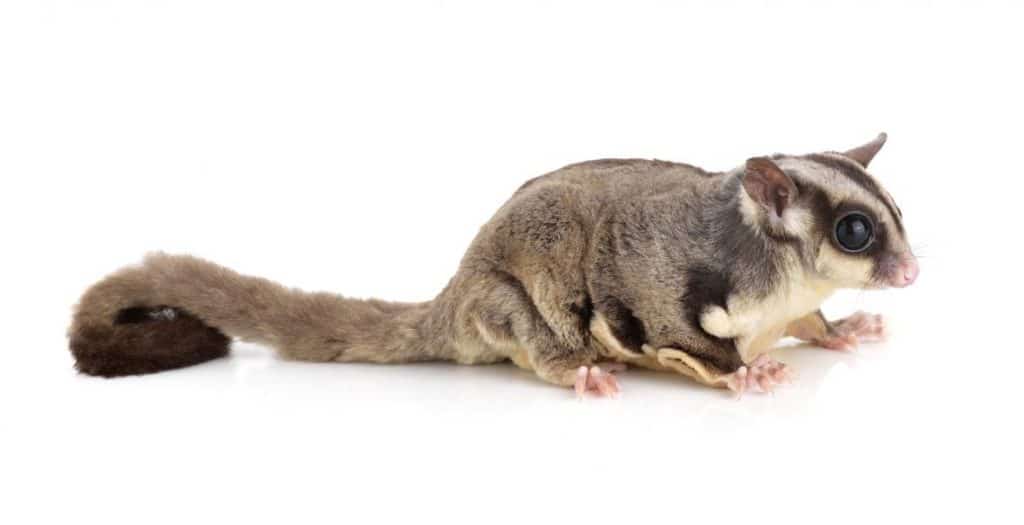
Sugar Glider

[Read more…]

Filed Under: Squirrels!

  • « Previous Page
  • 1
  • …
  • 3
  • 4
  • 5
  • 6
  • 7
  • 8
  • Next Page »
DMCA.com Protection Status Fatbirder's Top 1000 Birding Websites Privacy Policy