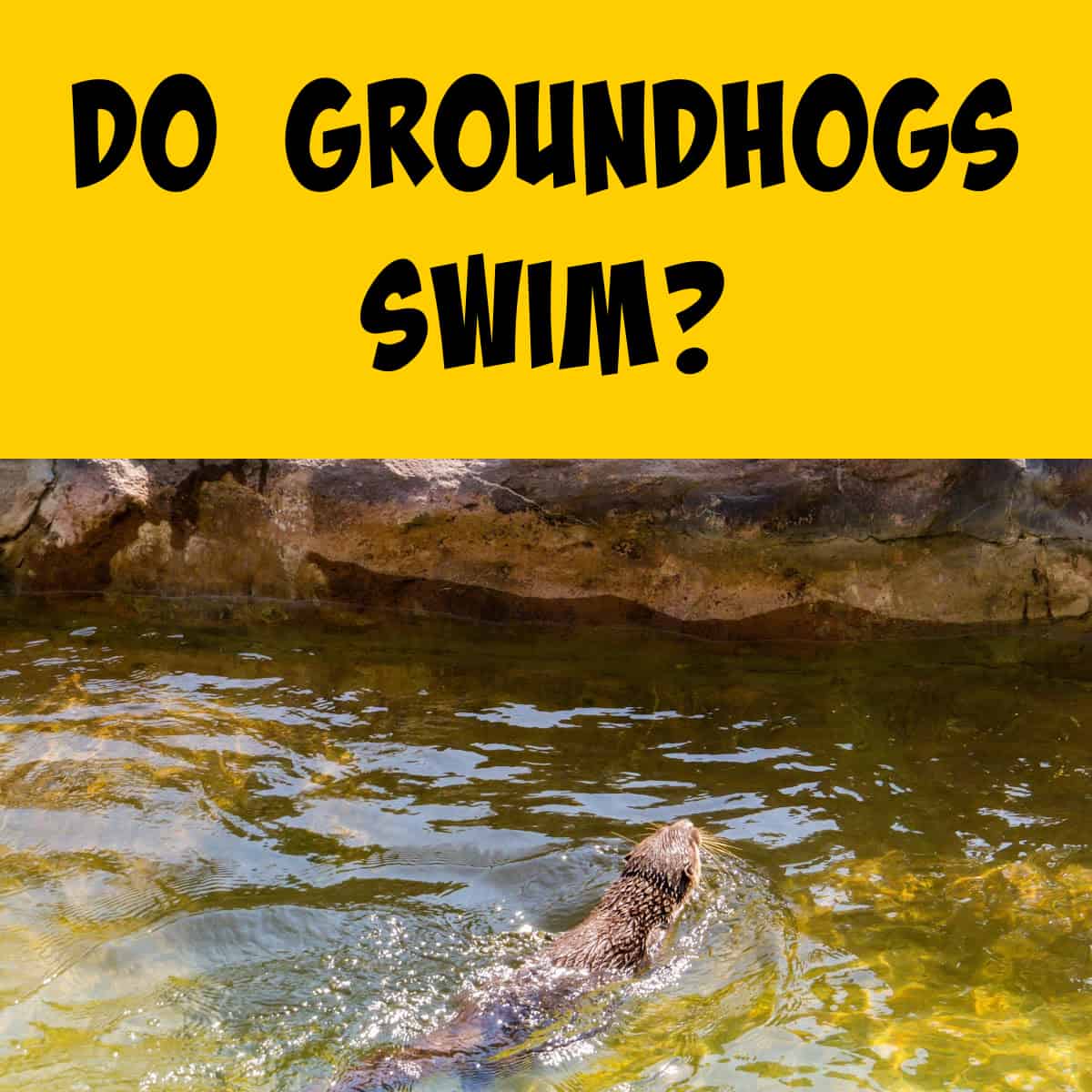
Groundhogs, also known as woodchucks, are fascinating creatures that are commonly found across North America. While many people associate them with their burrowing habits some folks ponder about their swimming abilities. Have you ever asked, “Do Groundhogs Swim?”
The answer is, “Yes, groundhogs do swim but only for short distances as they are not extremely adept in water.”
Keep reading to learn more about this animal’s relationship with water.
Groundhog Physical Characteristics
Groundhogs are medium-sized rodents with a sturdy build. They have short, strong legs and sharp claws, which are primarily designed for digging extensive burrow systems. Their body structure is more suited for a life on land, especially for burrowing and foraging.
However, like many mammals, groundhogs have a layer of fur that can repel water to some extent. This doesn’t necessarily mean they are natural swimmers, but it suggests that they aren’t entirely defenseless when they find themselves in watery situations. Their short legs, while powerful for digging, aren’t the best for swimming long distances.
Groundhog Habitats and Environments
Groundhogs typically reside in open fields, meadows, and woodland edges. They prefer areas where the ground is soft enough for them to dig their burrows, which serve as their homes, hiding spots, and hibernation sites. These burrows can be quite extensive, with multiple entrances and chambers.
While they don’t specifically choose habitats near water, it’s not uncommon to find groundhog burrows near streams or ponds. Proximity to water can offer them an additional source of food and a quick escape route from predators. However, this doesn’t necessarily mean they are frequent swimmers.
Groundhogs and Water
Historically, there have been occasional observations of groundhogs near water. Sometimes, they are seen wading in shallow streams or ponds, especially during hot summer days. These instances, however, are more about cooling off or searching for food rather than swimming for the sake of it.
Comparatively, other rodents like beavers and muskrats are known to be excellent swimmers, often building their homes in or near water. Groundhogs, on the other hand, don’t have the same affinity for aquatic environments. While they can handle being in water, they aren’t naturally inclined to swim like some of their rodent cousins.
You can check out this article about Groundhogs vs Beavers to learn more about the similarities and differences between these species.
The Swimming Abilities of Groundhogs
When groundhogs do find themselves in water, they can swim, albeit not very gracefully or for extended periods. Their swimming can be described as more of a dog-paddle, using all four legs to stay afloat. They aren’t built for deep or long swims, and they usually stick to shallow areas.
There might be situations where a groundhog needs to cross a water body, perhaps to escape a predator or to explore a new territory. In such cases, they will swim out of necessity. However, it’s essential to differentiate between wading in shallow water and actual swimming. Groundhogs are more likely to wade than to swim.
Risks and Dangers
Water poses several risks for groundhogs. First, they are more vulnerable in water, making them easy targets for predators like hawks or foxes. Their movement is restricted, and they can’t escape as quickly as they would on land.
Additionally, environmental factors like strong currents can be a danger. Groundhogs aren’t strong swimmers, so getting caught in a current could be life-threatening. Cold water can also be a hazard, especially if the groundhog gets wet and then exposed to freezing temperatures.
Groundhogs and Human Interaction Near Water
There have been instances where groundhogs have been found in human-made water sources like swimming pools. In such situations, they are often looking for a way out, as pools can be challenging for them to escape due to their steep and slippery sides.
For homeowners or property managers, it’s essential to ensure that groundhogs and other wildlife have a way to get out if they fall into a pool or pond. Simple measures like placing a ramp or a floating object can help these animals find their way out and prevent potential drownings.
Conclusion
In conclusion, while groundhogs can swim, they aren’t natural swimmers. Their bodies are designed more for a terrestrial life of digging and foraging. However, their adaptability means they can handle water when necessary. As with all wildlife, it’s crucial to understand and respect their habits and habitats, ensuring that we coexist harmoniously.
