Every once in a while, we come across questions that intrigue us and send us down a rabbit hole—or in this case, a groundhog hole—of discovery. Groundhogs and snakes are both fascinating creatures, but do their paths cross in a way that involves one eating the other? Let’s dive deep into this curious question!
Imagine you’re out in the woods or your backyard, and you see these two unlikely animals interacting. What might be happening? Is there more to the story than meets the eye? This article seeks to uncover the truth behind the dietary preferences of groundhogs and their interactions with snakes.
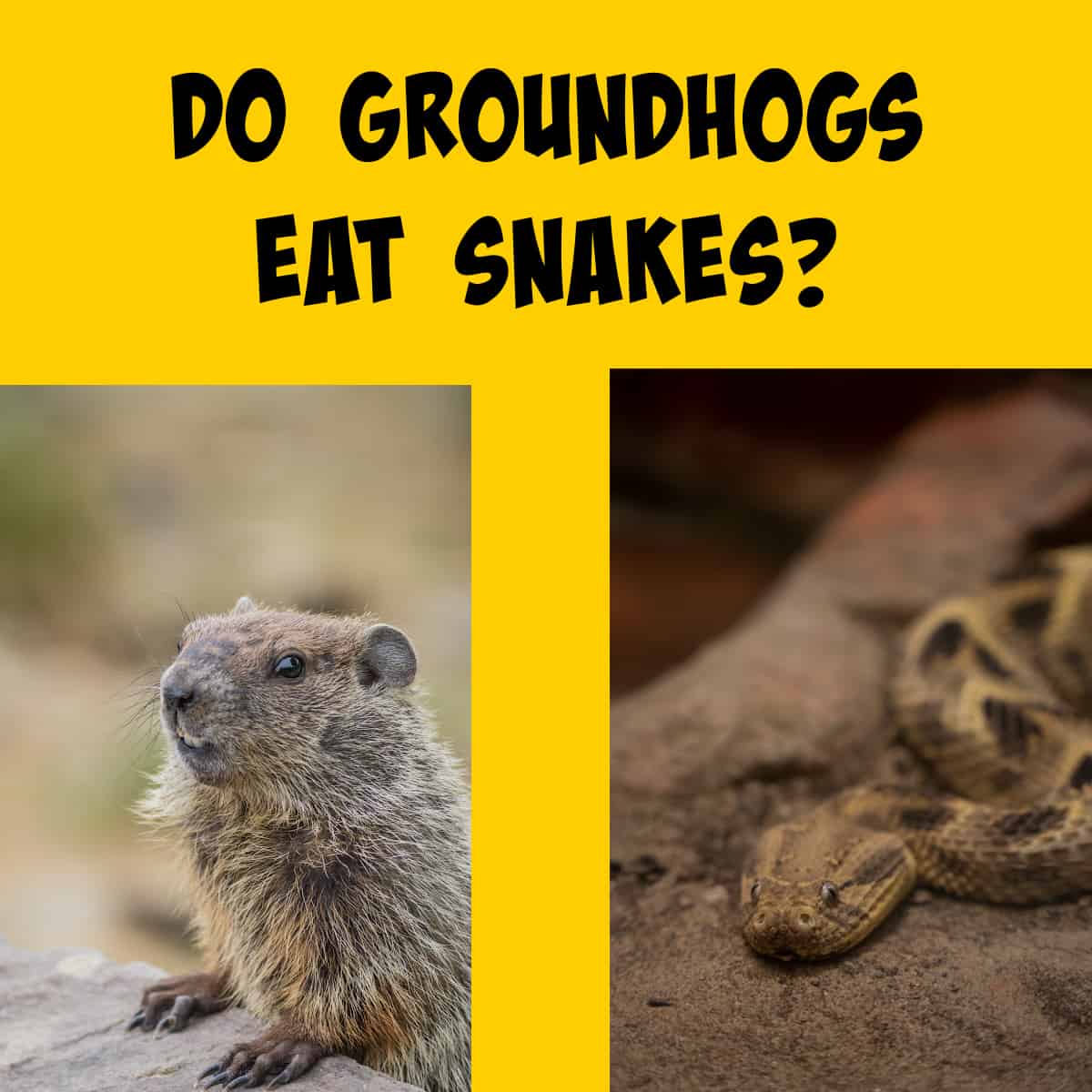
Groundhog Basics
Groundhogs, also known as woodchucks, are mammals belonging to the rodent family. They’re often associated with their shadow-seeing abilities on Groundhog Day, but there’s much more to these burrowing creatures.
Mostly found in North America, these animals thrive in open spaces like meadows, fields, and areas near woods. They’re best known for their extensive burrowing habits, creating complex tunnel systems that serve as their homes.
Characterized by their brownish-gray fur and sturdy build, groundhogs are usually seen during the day, making them diurnal creatures. They’re mostly solitary and can be quite territorial about their burrowed homes.
General Diet of Groundhogs
Groundhogs are primarily herbivores. Their diet mainly consists of wild grasses, fruits, and plants. If you’ve ever seen them nibbling in your garden, they might be feasting on tomatoes, peas, or perhaps even your favorite flowers.
Occasionally, they might eat small insects or snails, especially when other food sources are scarce. However, it’s crucial to understand that vegetation makes up the bulk of their dietary intake.
While they do have strong, sharp teeth that can gnaw through tough plant material, it’s rare for groundhogs to show predatory behavior towards larger animals. Their dental structure and digestive system are geared more towards breaking down plant matter.
Observational Evidence
Accounts of groundhogs interacting with snakes are sparse. However, on the few occasions that such interactions have been observed, they’ve typically been incidental, like a snake wandering into a groundhog’s burrow.
Wildlife enthusiasts and researchers have noted that when these two animals encounter each other, it’s usually more out of curiosity or accidental trespassing rather than a hunt. Groundhogs tend to be more focused on defending their territory than preying on an intruding snake.
While there isn’t substantial evidence to suggest groundhogs eat snakes as part of their diet, the animal kingdom is vast and unpredictable. Individual instances might not represent the general behavior of a species.
The Groundhog’s Prey
When we talk about what groundhogs naturally prey upon, the list is quite short. Their primary focus is on plants and vegetation. From tender leaves to juicy fruits, their preference leans heavily towards greenery.
There’s little evidence to suggest groundhogs target reptiles or larger prey like chickens. Groundhogs, with their herbivorous inclinations, don’t have the same hunting instincts as some other animals.
Any deviation from their usual diet, like consuming insects or snails, is more opportunistic than habitual. Groundhogs aren’t known to be active hunters, seeking out animals for sustenance.
The Snake’s Perspective
Snakes found in areas where groundhogs reside include garter snakes, black rat snakes, and sometimes even venomous varieties like copperheads. These reptiles are primarily focused on their prey, which usually consists of smaller rodents, birds, or insects.
A snake would typically see a groundhog as a potential threat, not as prey. The size and build of a groundhog are way beyond what most snakes would consider edible.
If a snake ever ventures into a groundhog’s burrow, it’s usually in search of shelter or its prey. It’s unlikely that a snake would willingly approach a groundhog with the intent of a meal.
Benefits or Drawbacks of Consuming Snakes
From a nutritional standpoint, snakes provide proteins and are a meaty source for many predators. However, for groundhogs, the benefits might not outweigh the risks.
Snakes, especially venomous ones, pose a threat with their bites. While a groundhog might be curious or defensive, the danger of being bitten by a venomous snake is real.
Furthermore, groundhogs are not adapted to digest meat efficiently, especially not from larger animals like snakes. Their gut flora is more suited to breaking down plant matter, making snakes an unsuitable meal even if they did try to eat them.
Comparison with Other Animals
Many animals, like eagles, hawks, and even some mammals, actively hunt and eat snakes. These animals possess the necessary tools, whether it’s sharp talons, keen eyesight, or agility, to take down snakes efficiently.
Groundhogs lack such adaptations. Unlike the keen predatory instincts of an eagle or the nimbleness of a mongoose, groundhogs are burrowers and grazers by nature.
It’s fascinating to compare the dietary habits of different animals. While they all share the same environment, their ways of life and survival strategies can be vastly different.
The Role of Human Observations
Human encroachment into natural habitats sometimes leads to increased interactions between species. As we build closer to their homes, animals like groundhogs and snakes might find themselves in unfamiliar situations.
In areas where their natural habitats are disturbed, groundhogs might be seen more frequently as they search for food and shelter. Similarly, snakes might be driven into more populated areas, increasing the chances of encounters with groundhogs.
Yet, even in these changed circumstances, the diet of these animals remains largely consistent with their natural inclinations, and any deviations are exceptions rather than the norm.
Conclusion
The world of wildlife is full of mysteries and ever-evolving relationships. While it’s tempting to believe that groundhogs might eat snakes based on isolated observations or assumptions, the evidence suggests otherwise.
Groundhogs, with their herbivorous diet and burrowing lifestyle, don’t align with the predatory behavior required to hunt and consume snakes.
It’s a reminder that nature is intricate, and each species plays a unique role in the ecosystem, often in ways we might not immediately realize.
