Groundhogs, often seen scurrying across fields or peeking out of burrows, are fascinating creatures with a range of behaviors. Many people associate them with their burrowing habits, but a question that often arises is, “Do groundhogs climb trees?”
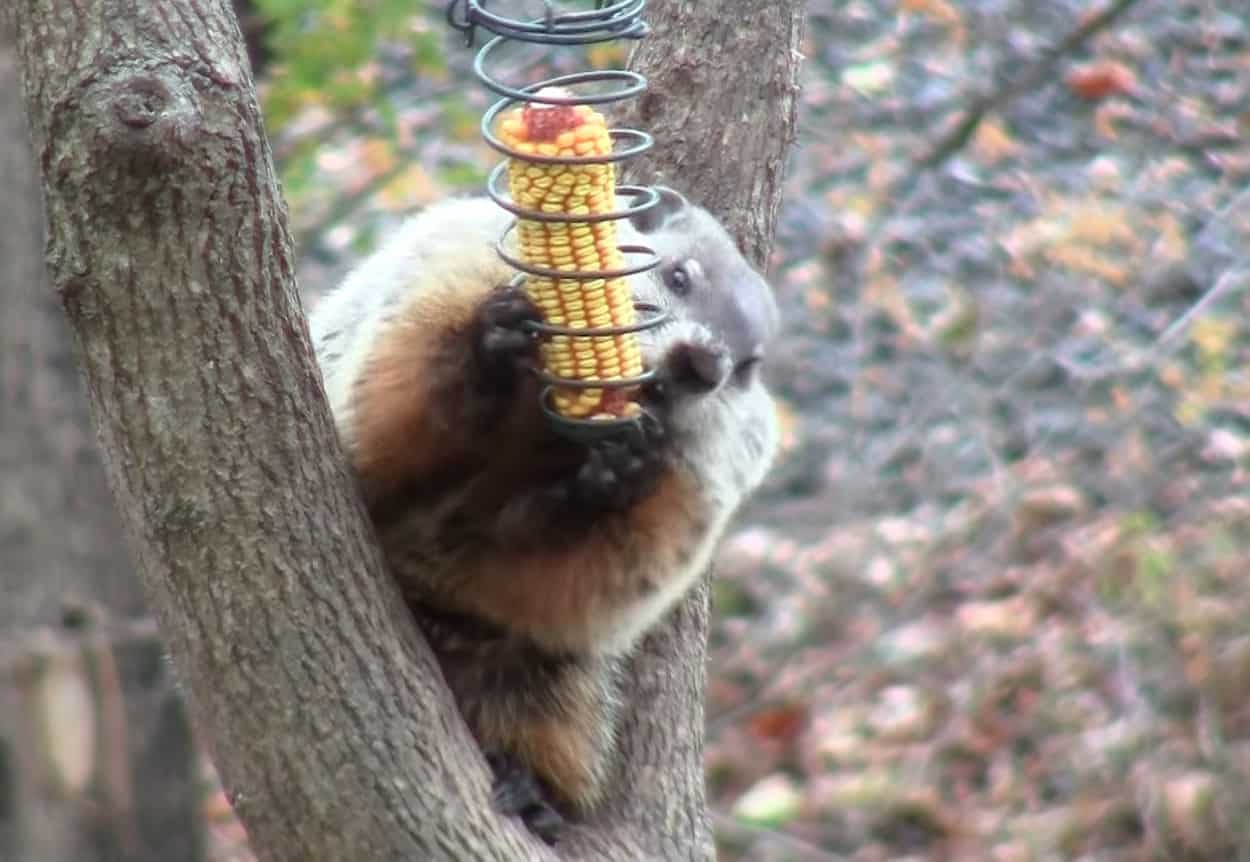
The answer is, “Yes, groundhogs do climb trees. Groundhogs climb trees in search of food, to escape predators and out of sheer curiosity.”
While groundhogs are primarily known for their digging prowess, their relationship with trees is less commonly discussed. This article aims to shed light on this lesser-known aspect of groundhog behavior.
Background on Groundhogs
The groundhog, scientifically known as Marmota monax, belongs to the squirrel family. These creatures are often referred to as woodchucks, a name derived from the Native American word “wuchak.”
Groundhogs have a sturdy build, with a body length ranging from 16 to 20 inches and a weight of 4 to 9 pounds. Their brownish-gray fur and strong limbs make them well-equipped for both digging and other activities. They are commonly found in North America, living in meadows, pastures, and even close to human settlements.
Groundhogs and Climbing
Contrary to popular belief, groundhogs can and do climb trees. While it’s not an everyday sight, there have been numerous observations of these creatures scaling tree trunks and branches.
Why would a groundhog climb a tree? There are several reasons. One primary reason is to escape from predators. When faced with a threat on the ground, a tree can offer a quick refuge. Additionally, groundhogs might climb trees in search of food, especially when their usual diet of grasses and plants is scarce. Lastly, like many animals, groundhogs are curious creatures and might climb just to explore their surroundings.
Physical Adaptations for Climbing
Groundhogs possess strong, sharp claws that aid in their digging. These same claws provide some grip when they decide to climb. Their sturdy limbs, which are primarily adapted for burrowing, also offer some strength when they pull themselves up a tree trunk.
However, it’s essential to note that while groundhogs can climb, they aren’t as adept at it as some other animals, like squirrels or raccoons. Their heavier body and shorter limbs mean they don’t have the agility or balance that tree-dwelling creatures possess.
Safety Concerns and Risks
Climbing trees is not without its risks for groundhogs. Their body structure isn’t ideally suited for such activities, making falls a potential hazard. A fall from a significant height can lead to injuries or even be fatal.
Furthermore, while trees might offer a temporary refuge from ground-based predators, they can expose groundhogs to new threats. Birds of prey, like hawks or eagles, might spot a climbing groundhog as an easy meal. Additionally, human activities, such as tree trimming or logging, can pose unexpected dangers to tree-climbing groundhogs.
Groundhogs in Urban vs. Wild Settings
In urban settings, groundhogs often have to adapt to a different set of challenges and opportunities. Buildings, roads, and human activity can limit their natural behaviors. However, urban environments can also present new climbing opportunities, like fences or decks.
In contrast, in wilder settings, groundhogs have more natural habitats but also face more predators. The choice to climb a tree in the wild might be driven more by necessity, like evading a fox, than in an urban setting where curiosity might be a more significant factor.
Myths and Misconceptions
There’s a common myth that groundhogs are strictly ground-dwelling creatures. As we’ve learned, this isn’t the case. Their ability to climb, though not as refined as some animals, is a testament to their adaptability.
Another misconception is that groundhogs hibernate in trees during the winter. In reality, they hibernate in burrows, deep underground, where the temperature remains relatively stable, protecting them from the freezing cold above.
Conclusion
Groundhogs, with their burly bodies and strong limbs, are full of surprises. Their ability to climb trees, though not commonly known, is a fascinating aspect of their behavior. Understanding these creatures in both their natural and urban environments helps us appreciate the adaptability and resilience of wildlife.
